When engineers ask, “what applications require precision micro motors,” they usually mean more than motors with small dimensions. They need controlled motion, stable torque, low vibration, and predictable service life. Precision micro motors from China support medical instruments, camera modules, laboratory equipment, robotics, smart locks, and compact pumps. Their value depends on application fit. It also depends on verified production quality.
A slight speed variation can affect liquid dosing in a diagnostic device. In a camera gimbal, backlash may produce visible image shake. A tiny actuator inside a wearable device must balance force, heat, noise, and battery use. These details are easy to overlook. They should not be. Supplier evaluation should include drawings, test reports, tolerance data, lifecycle results, and traceability records. Experienced buyers also review winding methods, magnet grades, bearing selection, gearbox accuracy, and controller compatibility. Sample testing can reveal startup hesitation, gear noise, or unexpected heat. Datasheets rarely show everything.
This guide examines applications that genuinely benefit from Chinese precision micro motors. Typical fields include surgical tools, dental equipment, optical systems, automated valves, robotic joints, and aerospace support instruments. Each field demands different standards and validation procedures. Medical and safety-related products may require additional certifications and documented controls. A reliable supplier should explain those requirements clearly, without promising impossible performance. No sourcing decision is perfect. Even careful teams can miss a small integration problem. That is why application testing, supplier audits, and honest technical communication remain essential. The best motor is not always the smallest one. It is the one that performs consistently in its real operating environment.
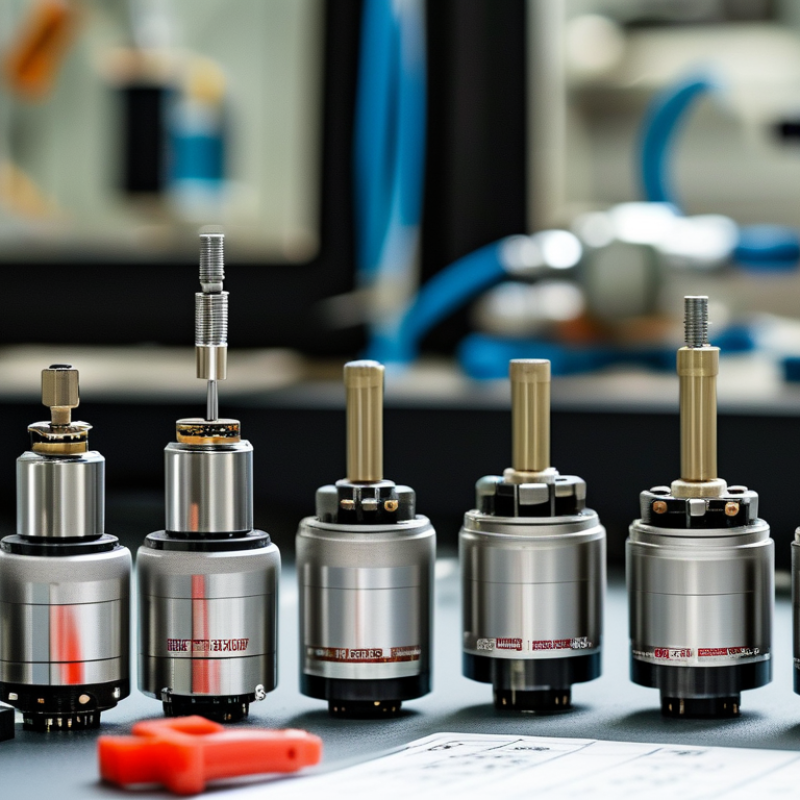
Precision micro motors manufactured in China cover several distinct designs. Coreless DC motors deliver quick acceleration for camera focus modules, portable instruments, and miniature pumps. Brushless DC motors offer longer operating life and lower electrical noise. They fit medical devices, laboratory automation, and compact cooling systems. Stepper motors provide controlled movement, making them useful in optical stages, valves, and small robotic joints. Planetary gear motors add torque without greatly increasing the motor’s diameter. Voice-coil motors are another option for short, rapid linear movement.
Market data supports this broad demand. MarketsandMarkets projects the global micro motor market to grow from approximately US$39.8 billion in 2023 to US$56.5 billion by 2028. Grand View Research also reports continued growth in miniature motor applications, driven by medical equipment, automotive electronics, and factory automation. China’s dense supply chain can support customized shafts, windings, gear ratios, and connector layouts. Yet lower pricing alone does not prove precision. That assumption needs more testing.
Tips: Match the motor type to the load profile, not only the rated voltage. Request speed-torque curves, gearbox backlash data, noise readings, and endurance results. For medical or laboratory equipment, verify traceability and production controls before sampling. A motor may pass a short bench test but fail after thousands of thermal cycles. Specify the real duty cycle, including pauses, starts, vibration, and stall risks.
| Application Area | Typical Equipment | Recommended Micro Motor Type | Typical Voltage | Typical Speed Range | Key Precision Requirements | Common Manufacturing Features |
|---|---|---|---|---|---|---|
| Medical Devices | Infusion pumps, laboratory analyzers, surgical instruments, dental handpieces | Brushed DC motor, brushless DC motor, geared motor | 3–24 V DC | 1,000–50,000 rpm | Stable speed, low vibration, controlled torque, compact dimensions | Low-noise winding Precision gear reduction |
| Robotics and Automation | Robot joints, grippers, miniature conveyors, inspection mechanisms | Brushless DC servo motor, coreless motor, geared motor | 6–48 V DC | 500–30,000 rpm | Fast response, repeatable positioning, high torque-to-weight ratio | Encoder compatibility Low rotor inertia |
| Optical and Imaging Equipment | Camera lens modules, autofocus systems, optical shutters, microscope stages | Stepper motor, voice coil motor, miniature geared motor | 3–24 V DC | 50–20,000 rpm or linear motion | Fine resolution, low backlash, smooth motion, repeatable travel | Compact construction Low backlash |
| Automotive Electronics | Seat adjustment, mirror adjustment, HVAC actuators, instrument panels | Brushed DC motor, geared motor, brushless DC motor | 5–24 V DC | 500–15,000 rpm | Temperature tolerance, long operating life, resistance to vibration | Automotive-grade insulation Metal gear options |
| Consumer Electronics | Personal-care devices, compact fans, smart appliances, handheld equipment | Brushed DC motor, brushless DC motor, vibration motor | 1.5–24 V DC | 3,000–60,000 rpm | Low power consumption, quiet operation, small size, cost efficiency | Mass-production design Balanced rotor |
| Drones and Unmanned Systems | Flight-control actuators, camera gimbals, small propulsion systems | Brushless DC motor, coreless motor, servo motor | 3.7–24 V DC | 2,000–40,000 rpm | Low weight, rapid acceleration, efficient heat dissipation, precise control | Lightweight rotor High efficiency |
| Factory and Laboratory Instruments | Sample handlers, dosing systems, barcode scanners, valve actuators | Stepper motor, geared DC motor, brushless servo motor | 5–48 V DC | 100–10,000 rpm | Accurate indexing, repeatability, stable torque, reliable continuous operation | Integrated feedback Precision bearings |
| Security and Access Systems | Electronic locks, biometric scanners, card readers, compact barriers | Geared DC motor, stepper motor, brushless DC motor | 3–24 V DC | 50–10,000 rpm | High holding torque, controlled rotation, low standby power | Self-locking gearbox Position sensing |
| Printers and Document Equipment | Paper-feed units, cartridge mechanisms, scanning modules, label printers | Stepper motor, brushed DC motor, geared motor | 5–36 V DC | 100–15,000 rpm | Precise incremental movement, consistent torque, low acoustic noise | Fine-step control Long-life commutator |
| Aerospace and Specialized Equipment | Miniature actuators, sensor positioning systems, compact pumps | Brushless DC servo motor, coreless motor, precision geared motor | 6–48 V DC | 300–30,000 rpm | Low mass, high reliability, vibration resistance, strict dimensional control | High-grade bearings Controlled balancing |
Infusion pumps, diagnostic analyzers, surgical tools, and miniature positioning systems use it. A motor may move a valve fractions of a millimeter. Quiet movement matters near patients.
Define travel, speed, torque, positioning tolerance, voltage, and duty cycle. Include temperature conditions. Be specific.
No. Size alone says little about performance. Check torque stability, heat, vibration, noise, service life, and available space.
Request torque-speed curves, stall behavior, winding details, dimensional tolerances, and life-test conditions. Ask for traceable inspection records. Vague results deserve review.
Test samples with the intended load, voltage, temperature, and operating cycle. Use the actual gears, shafts, and electronic drivers when possible. Laboratory results can mislead.
Gears may add backlash. Bearings may increase friction. Drivers can introduce electrical noise. Assembly changes the system. This is easy to overlook.
Review rotor-balance controls, bearing-wear checks, electrical inspections, and pilot-batch results. Compare several units, not only one polished sample. Variation matters.
Engineers should answer technical questions clearly and explain design changes. Also confirm tooling ownership, production capacity, packaging, and delivery controls. A low quotation is not enough.
Evaluate the complete assembly against applicable safety and risk-management requirements. Consider predictable failure behavior, temperature rise, noise, and repeated-cycle performance. Perfect assumptions do not exist.
Precision micro motors manufactured in China support a wide range of applications where compact size, accurate movement, low power consumption, and reliable performance are essential. Common types include brushed and brushless DC motors, gear motors, stepper motors, and customized micro drive systems. In medical devices, these motors enable precise motion in pumps, surgical instruments, diagnostic equipment, and portable treatment systems. Their small dimensions and controllable output make them suitable for equipment that requires quiet, stable, and repeatable operation.
In robotics and industrial automation, micro motors provide movement for grippers, joints, sensors, inspection tools, and compact actuators. Consumer electronics also use them in cameras, smart appliances, personal care devices, office equipment, and wearable products. When evaluating a Chinese supplier, buyers should consider motor efficiency, torque, speed control, noise, durability, customization capability, quality management, testing procedures, production capacity, and communication efficiency. Understanding what applications require precision micro motors helps companies select the appropriate motor structure and supplier for dependable long-term performance.

 KPM Minimoto