In the ever-evolving field of electronics, understanding "how does a mini DC motor work" is crucial for project success. Mini DC motors are widely utilized in applications ranging from robotics to hobbyist DIY projects. According to a recent report by Grand View Research, the global DC motor market is projected to reach USD 22.43 billion by 2027. This indicates a growing demand for efficient, compact solutions, especially in consumer electronics.
A mini DC motor operates on the principles of electromagnetism. When electrical current flows through the motor, it generates a magnetic field. This interaction between the magnetic field and the motor's components facilitates rotational motion. While the mechanics seem straightforward, achieving optimal performance can be complex. Factors such as load, voltage, and motor design significantly influence efficiency.
Experimentation is essential for real-world applications. Many projects face challenges, notably power consumption and torque limitations. Users must consider these factors carefully when designing their systems. Ultimately, understanding the functionality and limitations of mini DC motors can lead to enhanced project outcomes. Embracing trial and error can pave the way for innovation and improvement in mini DC motor applications.
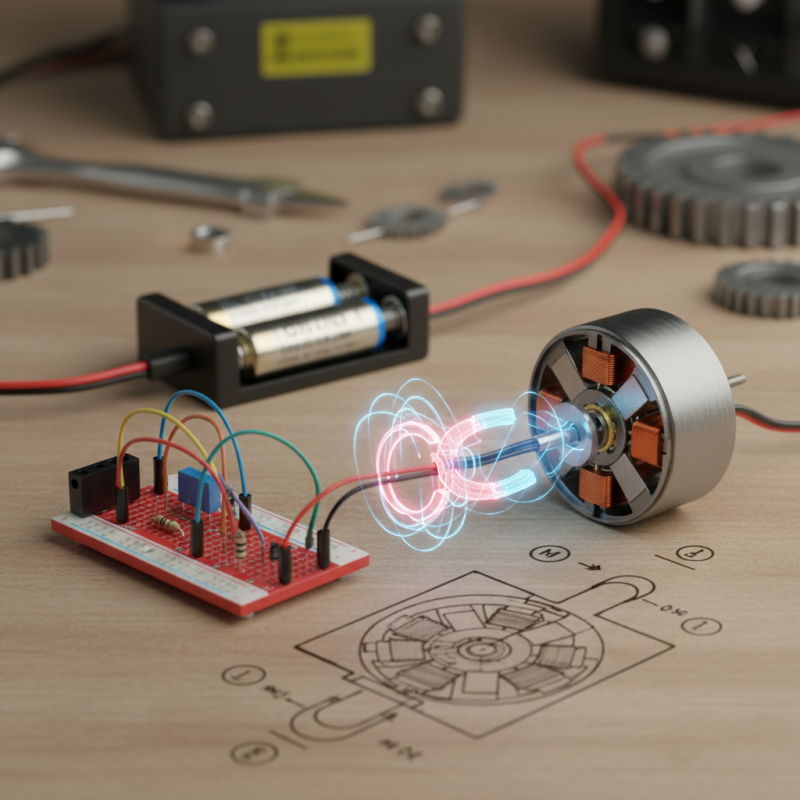
Understanding the Basic Components of a Mini DC Motor
Mini DC motors are crucial in various projects, from robotics to household devices. Understanding their components is key to utilizing them effectively. The primary components include the stator, rotor, commutator, and brushes. Each part contributes to the motor's function, enabling motion and torque. The rotor, for instance, rotates within the magnetic field created by the stator. This interaction produces the rotational force essential for movement.
Most mini DC motors operate at low voltage and provide reliable performance. According to industry reports, over 90% of miniature motors operate at voltages below 12 volts. These motors are compact, often measuring just a few centimeters. For example, a common 130-size mini motor is only about 33 mm in diameter. Despite being small, they deliver impressive speeds, sometimes exceeding 20,000 RPM. However, with high-speed operation comes the challenge of heat generation, which can reduce efficiency if not managed properly.
Many users find it challenging to select the right motor for specific applications. Not all mini DC motors are created equal; variations in windings and materials influence performance. Understanding these factors can lead to better project outcomes. Reports indicate that up to 30% of project failures in hobbyist applications stem from improper motor selection. This highlights the importance of deeper knowledge in motor mechanics. Small improvements in motor choice can significantly enhance overall project success.
Mini DC Motor Voltage vs. Speed
This chart illustrates the relationship between the supply voltage and the speed (RPM) of a mini DC motor. As the voltage increases, the speed of the motor also increases, showcasing the direct correlation between these two parameters.
How Mini DC Motors Convert Electrical Energy into Motion
Mini DC motors are fascinating components widely used in various projects. They convert electrical energy into kinetic energy, enabling movement. When voltage is applied, a magnetic field is generated inside the motor. This field interacts with the rotor, causing it to spin. The simplicity of this process makes DC motors ideal for DIY enthusiasts and engineers alike.
The rotor’s rotation results from electromagnetic induction. Coils on the rotor create magnetic fields when powered. These interact with fixed magnets in the motor. The result is motion. However, there are efficiency concerns. Power loss due to heat and friction can impact performance. Projects may require careful consideration of these factors to ensure optimal functioning.
Despite their capabilities, mini DC motors may have limitations. They can struggle under heavy loads. Excessive current may lead to overheating. This demands attention during design phases. Planning for cooling and load management is crucial. Understanding these nuances helps create better projects and outcomes.
Exploring the Principles of Electromagnetism in Mini DC Motors
Mini DC motors are fascinating devices that harness the principles of electromagnetism to generate motion. At their core, these motors consist of a rotor, stator, and commutator. When electricity flows through the rotor's winding, it creates a magnetic field. This interaction between the magnetic field and the stator's field generates torque, leading to rotation. According to a report by the International Electrotechnical Commission, DC motors now account for over 80% of the global motor market due to their efficiency and adaptability.
The mini size of these motors makes them ideal for various projects, from robotics to household appliances. For example, they can be effective in driving small wheels or actuating switches. Their ability to operate at different speeds allows for precise control, which is crucial in applications like drone technology. However, the performance of these motors can be affected by factors such as temperature and voltage fluctuations. As a result, engineers need to consider thermal management and power supply stability in their designs.
Despite their advantages, mini DC motors come with challenges. For one, they require appropriate gear systems to handle specific load conditions. Not addressing these needs can lead to motor burnout or reduced lifespan. Moreover, the commutation process brings wear and tear. Regular maintenance, like cleaning brushes, is vital for optimal performance. This ensures that projects relying on mini DC motors are both reliable and efficient.
Applications of Mini DC Motors in Various Projects
Mini DC motors are versatile tools used in many projects. They are compact, efficient, and easy to control. These motors can be found in toys, robotics, and other devices. In robotic applications, mini DC motors provide movement and functionality. They help robots to navigate and perform tasks like picking up objects.
In home automation, mini DC motors enable window blinds to open and close. Small appliances like shavers and food processors utilize these motors as well. They can also be used in hobbyist projects such as model airplanes. Users often experiment with different configurations, leading to learning experiences.
One area of reflection is the motor's power requirements. When using mini DC motors, it's essential to calculate the right voltage and current. Miscalculating these needs can result in inefficient performance. Users must also consider gear ratios to maximize speed and torque. Balancing these factors requires trial and error. This process can teach valuable lessons in engineering and design.
Tips for Efficiently Integrating Mini DC Motors Into Your Designs
Mini DC motors are popular components in various projects due to their small size and efficiency. Understanding how to effectively integrate these motors can enhance your design and performance. According to industry reports, about 70% of hobbyist robotics projects utilize mini DC motors due to their versatility and reliability.
When integrating mini DC motors, it's crucial to consider power requirements. Ensure your power supply matches the motor's specifications. Using a voltage regulator can help maintain a steady current. Additionally, think about gear ratios. Adjusting these can optimize torque and speed, making your designs more effective.
Tip: Always test your motor in a prototype stage. This helps identify potential issues early. Monitor heat generation, as overheating can reduce motor life. Keep in mind that errors in configuration can lead to inefficient performance. Regular maintenance and calibration can prolong their usefulness. Lastly, thorough documentation of your motor integrations fosters continuous improvement in future projects.
FAQS
: Mini DC motors convert electrical energy into kinetic energy, enabling movement.
They operate using electromagnetic induction, with rotor coils interacting with fixed magnets to spin.
They're used in robotics, household appliances, and even drone technology for precise control.
Power loss due to heat and friction can affect performance, requiring careful planning.
Attention to cooling and load management during design can help prevent overheating.
Regular cleaning of brushes and checking gear systems are vital for optimal performance.
They often struggle under heavy loads, leading to potential burnout or reduced lifespan.
Power supply stability and gear ratios must align with motor specifications for best results.
Prototyping helps identify problems early, such as heat generation and configuration errors.
It fosters continuous improvement and helps address past performance issues in future designs.
Conclusion
A mini DC motor is a versatile component widely used in various projects due to its compact size and efficiency. Understanding how does a mini DC motor work begins with its basic components, which include an armature, commutator, and magnets. These parts interact to convert electrical energy into rotational motion. The principles of electromagnetism play a crucial role in this process, where an electric current generates a magnetic field, causing the armature to spin.
Mini DC motors find applications across numerous fields, from robotics to DIY electronics, illustrating their practicality. To effectively integrate these motors into your designs, it's essential to consider factors such as power supply, speed control, and mounting techniques. By grasping these concepts, you can harness the full potential of mini DC motors in your projects.

 KPM Minimoto