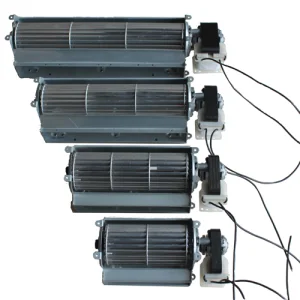
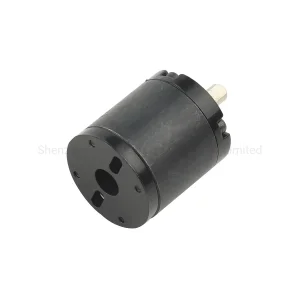
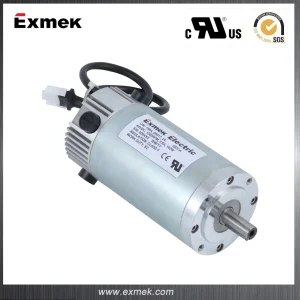
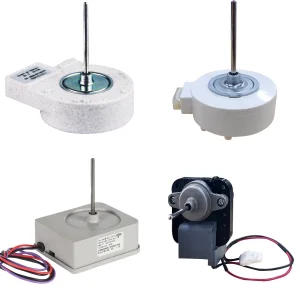
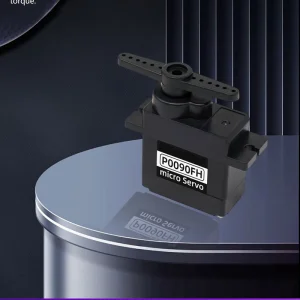
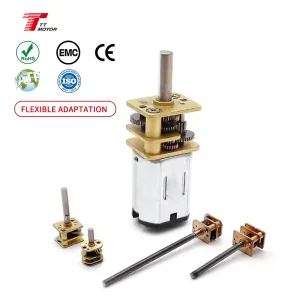
Engineered for high accuracy, continuous-duty workflows, and integrated software-defined motion profiles.
The industrial landscape is undergoing a monumental transition from fixed-speed, purely hardware-driven actuators to intelligent, software-defined programmable motion control systems. In the modern B2B market, programmable motors are not merely mechanical force generators; they are the physical nodes of the Industrial Internet of Things (IIoT). By integrating microcontrollers, embedded sensors, high-resolution encoders, and advanced fieldbus communications (such as CANopen, EtherCAT, Modbus, and IO-Link), these motors enable real-time dynamic calibration, predictive diagnostics, and variable motion speed/torque curves.
Globally, the demand for programmable DC motors, brushless systems (BLDC), and micro-servo assemblies is surging. Industry reports indicate that the precision micro-motor market size is expected to surpass $56 billion by 2030, driven by rapid advancements in collaborative robots (cobots), laboratory automation, wearable medical devices, automated guided vehicles (AGVs), and smart aerospace systems. North America and Europe continue to lead in top-tier R&D designs, but they rely heavily on high-performing manufacturing partners in Asia to scale production while satisfying stringent global regulatory standards (such as UL, CE, RoHS, and ISO certifications).
Global Market Value by 2030
Compound Annual Growth Rate (CAGR)
IIoT-Integrated Factory Nodes
Critical Failure Rate tolerance in Medical Robotics
Sourcing engineers face the complex task of selecting correct motor topologies based on the dynamic needs of their systems. Programmable motors encompass several sub-categories, each delivering tailored functional characteristics:
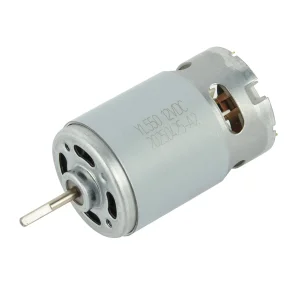
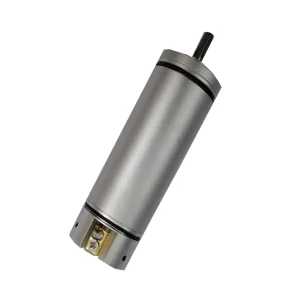
Highly valued for their longevity, thermal efficiency, and high torque density. Programmable BLDC controllers allow users to customize acceleration ramps, current limits, and positioning parameters. This makes them ideal for high-precision laboratory pumps, medical ventilation devices, and robotic joints.
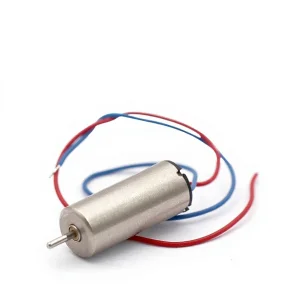
Without an iron core in the rotor, these motors offer zero cogging torque, rapid acceleration (low rotor inertia), and quiet operation. When combined with micro-encoders, coreless motors are the prime choice for portable infusion pumps, tactical drones, and optical focusing instruments.
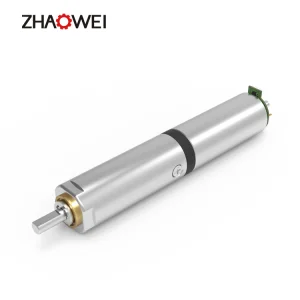
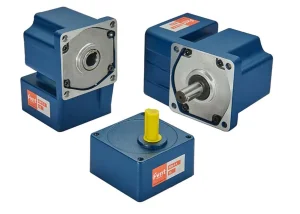
By arranging multiple outer gears around a central sun gear, planetary gearheads maximize torque output within highly restricted footprints. Selecting the correct reduction ratio determines the exact trade-off between operating velocity and mechanical force.
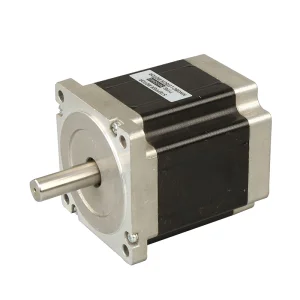
Unlike open-loop configurations, closed-loop steppers feedback position data dynamically. They prevent step-loss, offer high holding torque, and represent a cost-effective alternative to conventional servo systems in applications like 3D printing and precise conveyor control.
When selecting international exporters for custom motor solutions, sourcing executives prioritize manufacturing efficiency, supply chain stability, and raw technical competence. Over the past decade, China has shifted from low-cost component assembly to state-of-the-art precision engineering. Within this high-tech landscape, Chengdu KPM Minimoto Co., Ltd. has established itself as an elite OEM and ODM partner.
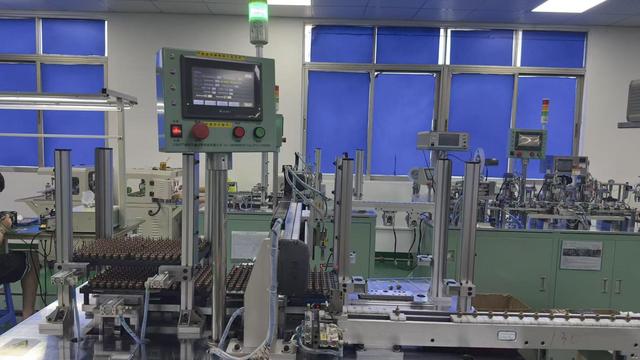
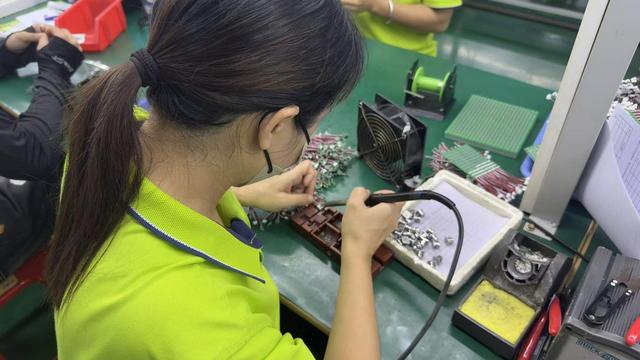
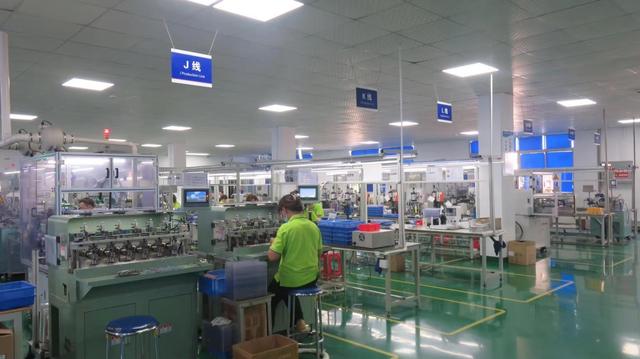
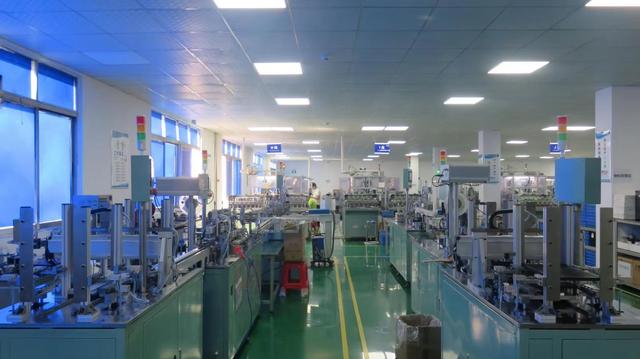
Founded in 2011 and headquartered in the industrial hub of Chengdu, Sichuan Province, China, KPM Minimoto operates a modern manufacturing facility covering more than 7,500 square meters and housing over 150 highly trained professionals. Unlike coastal regions, which are prone to volatile labor margins, Southwest China provides KPM Minimoto with direct access to advanced aerospace engineering universities, cutting-edge material science research facilities, and a highly stable technical workforce. This geographic concentration translates directly into consistent batch-to-batch product quality and cost-competitive engineering.
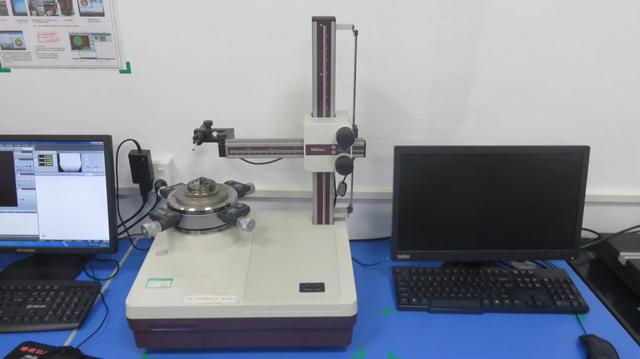
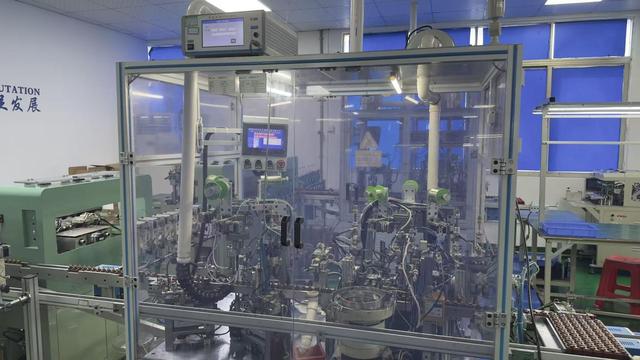
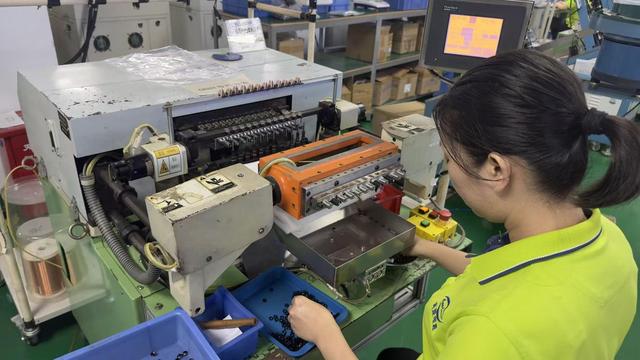
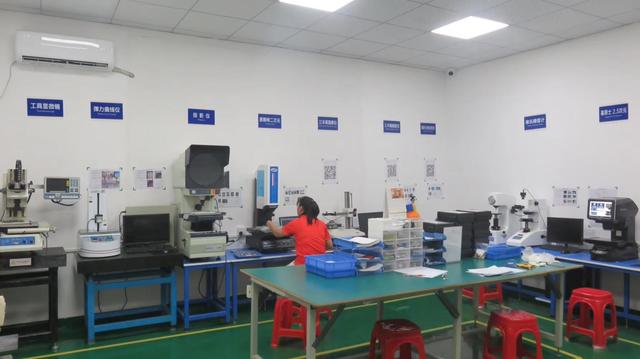
KPM Minimoto integrates R&D, sophisticated CAD/CAM design loops, precision toolmaking, automated winding lines, and rigorous validation chambers. The factory leverages advanced CNC Swiss-type lathes for micro-shaft fabrication and computerized stator winding systems. Each motor undergoes multi-stage inspections, including dynamic balance balancing, electromagnetic noise evaluation, and torque curve mapping. This strict quality control ensures every unit meets the exact operational lifetimes required by customers in Europe, North America, and the Asia-Pacific region.
An engineering-focused comparison of the industry’s leading innovators in high-precision motion control.
Renowned for ultra-precise coreless DC and brushless motors. Maxon is a premier brand utilized heavily in space exploration, high-tech surgical devices, and advanced robotic joints. Their pricing reflects high-end positioning, perfect for lower volume, ultra-critical applications.
Pioneers of the skew-wound self-supporting coreless rotor technology. Faulhaber excels in ultra-miniature drives, high-torque micro-planetary gearheads, and integrated linear actuator systems, offering high reliability and premium engineering customization.
A leading, agile OEM/ODM partner specialized in micro gear motors, coreless BLDCs, and customized drive controllers. By utilizing automated production and advanced tooling in their 7,500 sqm Chengdu plant, they offer unmatched cost-efficiency for mid-to-high volume custom integrations.
The world's largest manufacturer of hard-disk drive spindle motors, Nidec offers massive scalability for standard brushed, BLDC, and step motors. Their strength lies in global supply chains, mass automotive components, and standardized industrial motors.
A powerhouse in aerospace, defense, and heavy-duty industrial automation. Moog delivers extremely robust, highly reliable programmable servo drives and hydraulic systems designed to function under extreme temperatures and high shock environments.
A specialty manufacturer focusing on surgical motors, dental tools, and laboratory instruments. They provide highly efficient disc magnet motors, canister-style brushless units, and high-speed coreless motors that withstand autoclaving.
Specializes in designing advanced motion control solutions for medical, vehicular, and aerospace markets. Their programmable brushless controllers and outer-rotor motors are highly integrated with proprietary communication hardware.
A pioneer in integrated smart BLDC motors. Their modular system allows for the seamless combining of planetary gears, magnetic encoders, and programmable logic controllers (PLCs) into a single compact housing for AGVs and gate controllers.
A globally trusted name for fractional horsepower electric motors. Oriental Motor’s AlphaStep line offers reliable closed-loop stepping systems with integrated control software, widely used in semiconductor assembly and conveyor sorting.
A heavyweight in power electronics and factory automation. Delta’s AC servo drives and programmable controller kits provide excellent system-wide control for high-speed industrial assembly and factory-scale automation projects.
Precision motors must be tailored to their operating environments. Real-world implementations require specific engineering trade-offs:
To avoid costly re-designs, purchasing agents and engineering leads should cross-reference the following checklist before finalizing custom motor supplier agreements:
The motion control market is transitioning towards Decentralized Smart Actuation. Instead of sending raw power lines back to a bulky centralized electrical panel, modern B2B architectures place intelligence inside the motor casing. Embedded edge-computing processors are now running real-time field-oriented control algorithms. This reduces cable EMI emissions, simplifies system wiring, and speeds up response times during positioning cycles.
Additionally, integration of wireless programming (NFC or Bluetooth low-energy) allows maintenance technicians to re-configure motor acceleration parameters, speed ceilings, and wear notifications via standard industrial tablets. This minimizes machine downtime and eliminates the need for physical disassembly.
Get direct insights from our technical engineering department on choosing, programming, and procuring micro drives.
Engineered for quiet operation, high torque densities, and dependable integration across modern industrial systems.
 KPM Minimoto